
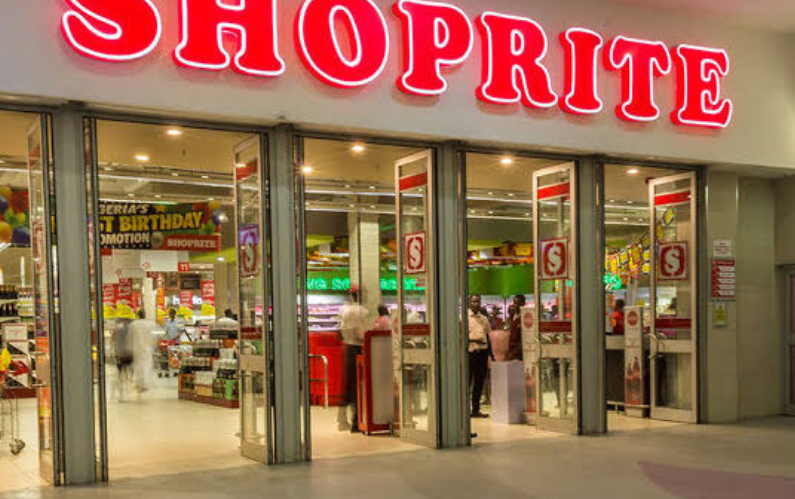
The Nigerian supermarket operator is shifting towards smaller standalone outlets after reopening three stores, as investors seek to reduce rental costs, improve operations and restore profitability.
Shoprite Nigeria plans to expand through standalone neighbourhood supermarkets as the retailer works to revive its operations following financial difficulties that led to a temporary shutdown and restructuring.
Adekunle Adebiyi, executive director of investments at MBO Capital Management Limited, an investor in the business, disclosed the plan during an interview on Nairametrics’ Drinks and Mics programme on Friday.
Adebiyi said three outlets had reopened after the company temporarily suspended operations to negotiate with suppliers and address outstanding financial obligations.
“We took a very, very drastic decision to just shut everything down whilst we negotiated with suppliers. Now three stores are back open,” he said.
The planned expansion represents a shift towards smaller retail formats that could allow Shoprite to serve residential communities without relying primarily on large shopping malls, where occupancy and operating costs can be substantial.
The company has not disclosed how many neighbourhood stores it intends to open, their proposed locations or a timeline for the expansion.
Smaller Stores Target Lower Operating Costs
Adebiyi said standalone neighbourhood supermarkets had been part of the retailer’s strategy, with the model expected to allow it to concentrate investment on supermarket operations rather than property development.
Unlike property-intensive retail models, supermarkets generally lease their premises and invest in equipment such as shelving, refrigeration and other store infrastructure.
However, Adebiyi said this asset-light structure could make it more difficult for retailers to secure conventional bank financing in Nigeria, where lenders often require tangible assets as collateral.
He disclosed that MBO Capital encountered financing challenges during the acquisition of Shoprite Nigeria because the business generated substantial revenue but lacked sufficient physical assets to satisfy lenders’ collateral requirements.
The experience highlights a financing challenge for businesses that depend heavily on leased properties and operational assets rather than owning significant real estate.
For Shoprite, the neighbourhood-store strategy could provide greater flexibility in selecting locations and controlling occupancy costs, although its commercial success will depend on customer demand, store productivity and effective cost management.
Foreign Exchange Volatility Deepened Financial Pressure
Foreign exchange volatility was another factor behind the retailer’s financial difficulties, according to Adebiyi.
He said approximately 17 of Shoprite Nigeria’s 28 stores had rental agreements denominated in US dollars when the acquisition took place.
The naira’s depreciation subsequently increased the local-currency cost of those leases, placing additional pressure on operating expenses.
Adebiyi said rent would ordinarily account for about 8 to 10 per cent of a supermarket’s revenue, but some Shoprite locations faced substantially higher rental costs.
The experience illustrates the exposure of retailers to foreign-currency obligations when revenues are earned predominantly in naira.
High occupancy costs can become particularly difficult to sustain when consumer purchasing power weakens and businesses face rising expenditure on electricity, diesel, logistics and inventory.
A smaller-store strategy could help the retailer avoid some of these pressures, depending on the lease terms and operating costs secured for new locations.
Technology and Inventory Management Complicated Recovery
Beyond rental expenses and financing constraints, Shoprite also faced operational challenges involving inventory management and its enterprise resource planning system.
Adebiyi said the retailer lost access to the system used by its former parent company, creating the need to invest billions of naira in a replacement.
Enterprise resource planning systems support core retail functions, including purchasing, stock management, financial reporting and supply-chain coordination.
Replacing such infrastructure can require substantial investment and disrupt operations if the transition is not managed effectively.
For a supermarket chain, effective inventory management is particularly important because stock availability, product turnover, supplier relationships and waste control directly influence profitability.
The additional technology expenditure diverted funds that could otherwise have supported the business, Adebiyi said.
From Ownership Change to Restructuring
Shoprite Nigeria’s current recovery efforts follow several years of changes in ownership and operating strategy.
In June 2021, a consortium led by Persianas Investment Limited completed the acquisition of the retailer’s Nigerian operations after South African retailer Shoprite Holdings decided to exit direct ownership of the business.
The Nigerian operation continued under Retail Supermarkets Nigeria Limited through a franchise arrangement.
The business subsequently faced pressure from rising operating costs and difficult trading conditions, leading to store closures and a restructuring programme.
In March 2026, Shoprite told Nairametrics that it was not leaving Nigeria but implementing a phased restructuring process that began in August 2025.
Bunmi Adeleye, chief strategy officer at Retail Supermarkets Nigeria Limited, had also disclosed plans to reopen outlets at The Palms Shopping Mall and Circle Mall in Lagos while exploring smaller neighbourhood formats to reduce expenditure on rent, electricity and diesel.
The latest plans indicate that the retailer intends to continue operating in Nigeria while reassessing the store formats and cost structures required to sustain its business.
Competition for Nigeria’s Neighbourhood Grocery Market
A move towards standalone neighbourhood supermarkets would place greater emphasis on proximity to customers, convenient shopping and the ability to operate profitably at individual store level.
For Shoprite, the challenge will be to determine whether smaller outlets can generate sufficient sales to cover rent, staffing, logistics, refrigeration, inventory and other operating expenses.
The retailer will also need to maintain competitive pricing and dependable product availability while rebuilding supplier relationships and improving operational efficiency.
Although the proposed expansion could offer a more flexible operating model, its ultimate impact will depend on execution and the economics of the locations selected.
Shoprite has yet to announce the number of outlets planned or when the next phase of its neighbourhood-store expansion will begin.
CapitalisAfrica | Business, Markets and People

